We need your help to keep this website free. You can

I honestly can’t stomach looking at the old way we used to package videos. You know exactly the style I’m talking about.
A neon yellow background. A gigantic, bright red arrow pointing at absolutely nothing. And the creator’s face, mouth wide open in fake shock, takes up half the screen. It worked for a while. I’ll admit it. But users are completely blind to it now. It just feels cheap. Like someone is screaming at you from across a crowded room.
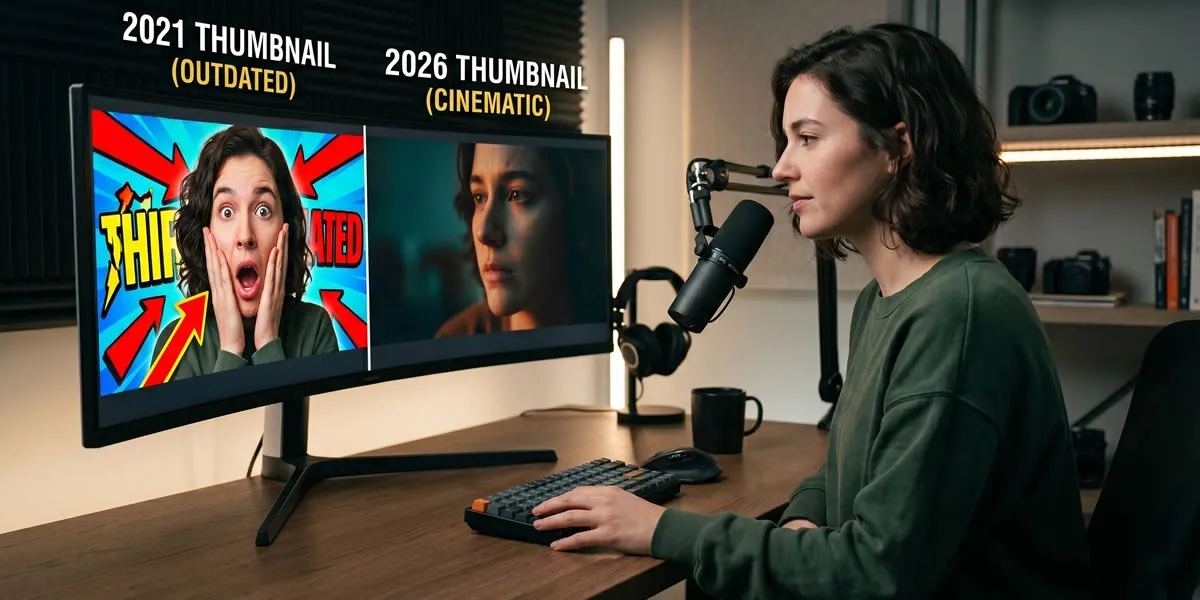
The internet has matured. The videos are getting longer and better, and the packaging is finally catching up.
Right now, the highest-converting visual hook on the internet isn’t a clickbait graphic. It’s the cinematic storytelling thumbnail. It’s about ditching the literal, loud graphics and leaning into moody, editorial metaphors.
Here is why this massive shift is happening, and how you can actually build a high CTR thumbnail strategy using it.
What Exactly Are Cinematic Storytelling Thumbnails?
Think about movie posters. When a studio promotes a psychological thriller, they don’t put giant block text that says “HE WAS THE KILLER THE WHOLE TIME ????” on the poster.
They give you a vibe. A beautifully lit, slightly mysterious scene that forces your brain to ask questions. That is what we are doing with video packaging now.
Instead of treating the thumbnail as a billboard, we are treating it as the opening shot of a film. We are moving away from literal translations of the title and leaning heavily into metaphors. It’s less about information and entirely about emotion.
Ditching the Obvious for the Abstract
Let me give you a really specific example.
Let’s say you’re producing a video about the grueling business side of the music industry. The old approach? You’d probably slap a stock photo of a sad guy holding a guitar next to a pile of cash. Boring. Predictable. You scroll right past it.
The 2026 approach is completely different. You generate a cinematic 16:9 editorial image showing an independent musician’s career as a busy nighttime city storefront instead of a traditional stage.
See the difference? It completely reframes the conversation. It tells the viewer, “This isn’t just another video about playing chords; this is about treating art like a gritty, late-night retail business.” It commands respect before the video even starts playing.
How AI Thumbnail Generation Leveled the Playing Field
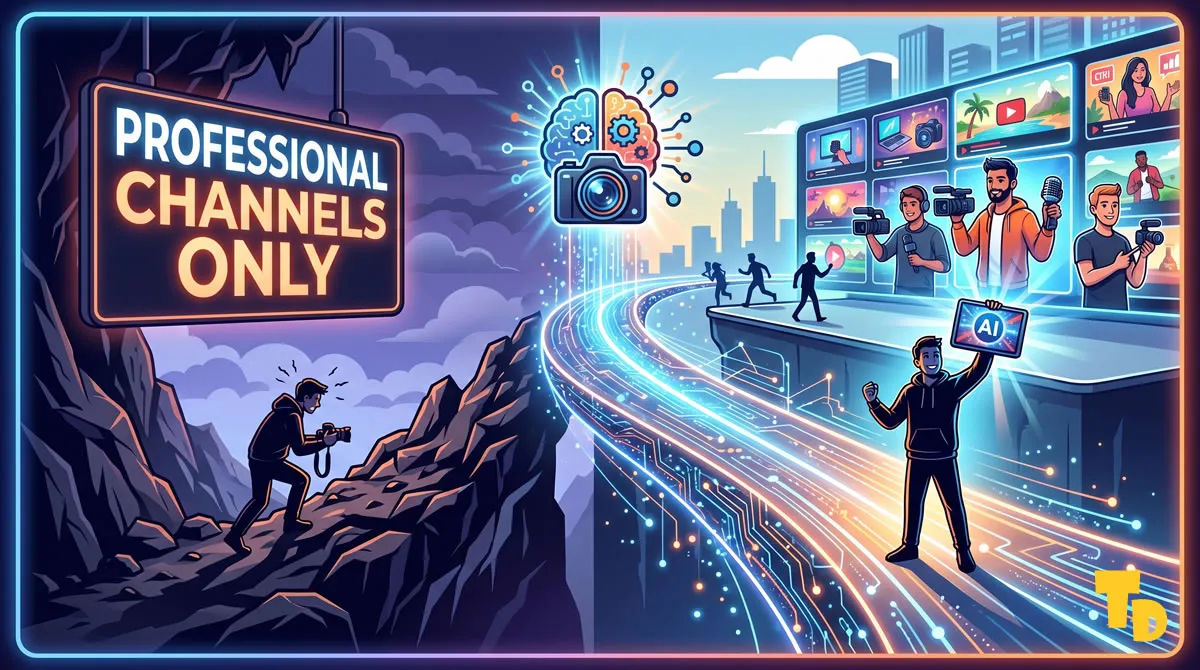
A few years ago, pulling off a highly polished, editorial look required a massive budget. You needed a photographer, a studio, and a color grader.
Not anymore. Advanced AI image generation has completely democratized this aesthetic. You can dream up wild, abstract concepts and spit out a 4K masterpiece in about thirty seconds. But the trick isn’t just knowing how to use the software. The trick is knowing how to use AI as your content Co-Pilot.
Visualizing Complex Niches and Macro Trends
This cinematic strategy works incredibly well for dry or overly complex topics. Especially in finance, tech, or global markets.
Imagine you are trying to break down how macroeconomics are impacting crypto. The title of your piece is something aggressive, like “Crude Oil Chaos: The Unexpected Catalyst Driving Bitcoin Now.”
How do you visualize that without making it look like a boring college lecture?
Please don’t just put a Bitcoin logo floating over an oil rig. It’s too literal. Instead, you prompt your AI for an editorial metaphor. Maybe a hyper-realistic, dark room where a wall street ticker tape is dissolving into black liquid, illuminated by a harsh, neon orange light.
You aren’t showing the data; you are showing the chaos. That is what gets the click.
Best Practices for 16:9 Editorial Images
If you want to start testing this on your own channels, you have to follow a few new rules. The mechanics of what makes a good image have changed.
- Kill the Text: Seriously. Take the text off the image. Let your title do the heavy lifting for SEO. The image should be completely clean.
- Embrace Shadows: Old clickbait was bright and washed out. Cinematic imagery relies on contrast. Don’t be afraid of dark, moody corners in your framing.
- The Subject Doesn’t Have to Look at the Camera: The days of making forced eye contact with the viewer are over. Profile shots, silhouettes, or subjects facing away into a vast landscape create an incredible sense of scale and mystery.
The Future of Video Packaging
We are finally treating online video with a little bit of respect.
When you spend hours—or days—researching, writing, and editing a piece of content, wrapping it in a cheap, neon graphic does a massive disservice to your own hard work.
Start thinking like an art director. Build a high CTR thumbnail strategy around curiosity, not desperation. Give your audience a beautiful, cinematic metaphor, and trust that they are smart enough to click and uncover the story.