We need your help to keep this website free. You can

A song on YouTube Music may now come with an AI label on its player page. YouTube began rolling out the marker on October 14 for music made primarily with generative AI, including tracks with generated compositions and vocals. Tap it and the app explains more about the recording's origin.
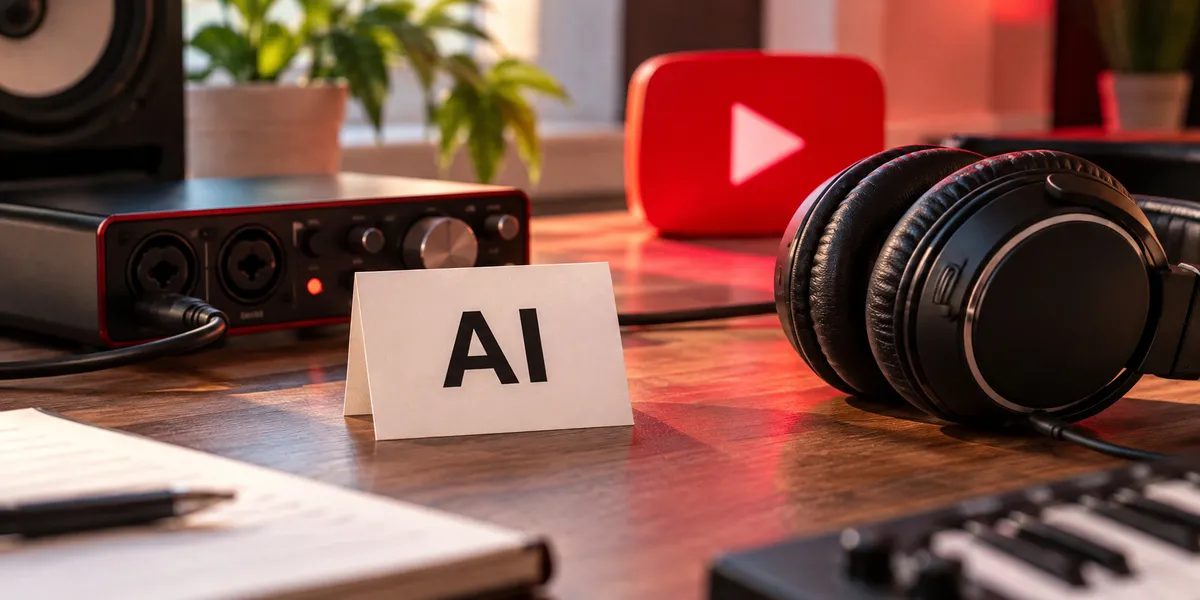
Thumbnail Downloader original editorial illustration of music production and AI disclosure; it is not a YouTube interface or official product photograph.
The question comes before publishing
The announcement says these music labels will reach the main YouTube app too. Music partners and YouTube's own detection tools help identify tracks. That does not leave an uploader free to wait for the system to decide.
YouTube's disclosure guidance puts a question about AI use in the upload flow's Attributes section. Generated music needs disclosure. Help with a title or thumbnail, on its own, falls under production assistance that does not.
Check the audio, not just the cover
A cover cannot settle that question. Plain artwork can accompany a generated song; an AI-assisted cover can accompany a human performance. Our suggestion is to establish where the audio came from before starting thumbnail testing. Otherwise, polishing the image can distract from the disclosure the recording needs.
YouTube can also use secure metadata to apply a label. This content-provenance information describes how a file was made, rather than whether it qualifies for original-creator recommendations.
Disclosure alone does not limit an audience or earning eligibility, according to YouTube. If an automatic label looks wrong, check the Studio notification and disclosure survey. Many can be corrected there, but labels tied to YouTube's own AI tools, qualifying metadata or manual review cannot be adjusted in the same way.