We need your help to keep this website free. You can

YouTube has outlined an expanded set of tools for news publishers, with thumbnail presentation and video testing among the changes. The update was discussed at the company's News Working Group in New York and covered in industry reporting. Some features concern how a story is packaged for viewers; others are still planned. Publishers should not read the announcement as a promise that every tool is already available in every account.
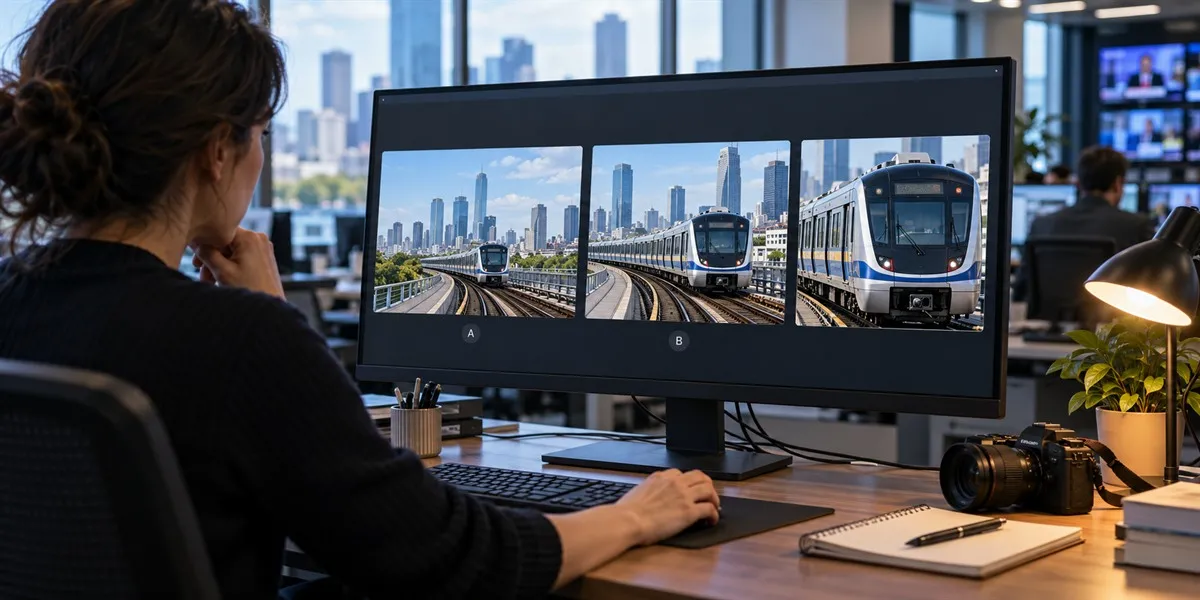
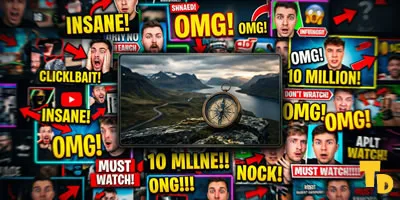
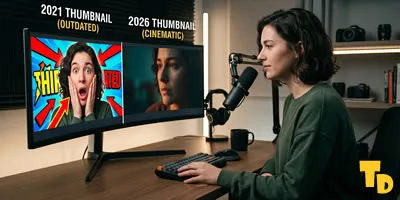
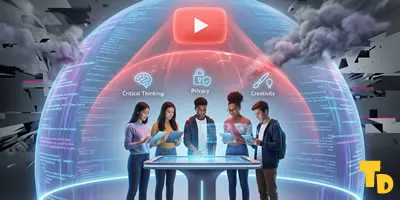
Thumbnail Downloader original editorial illustration of a newsroom comparing video cover options; the monitor is a conceptual workspace, not an official YouTube Studio screen.
Thumbnails become part of a broader testing workflow
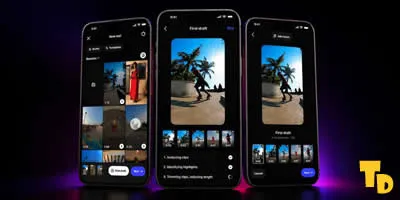
In its official overview for news partners, YouTube describes dynamic thumbnails that can surface a better-performing image for different audience segments. It also points to forthcoming A/B testing for video openings, formats and visual treatments. These are related decisions, but they are not the same test: a cover can attract interest while the opening determines whether the story delivers on it.
Better performance is not permission to distort
For a newsroom, two cover options might emphasise different elements of the same verified report. One could show the location; another could focus on the person involved. Either still needs to represent the story fairly. A dramatic crop that suggests a different event may earn attention while creating an editorial problem.
A thumbnail is a reduced-size preview, so details disappear quickly on a phone. Our guide to cinematic YouTube thumbnails explores the visual side of that constraint. News publishers have an additional duty: the strongest-looking version must remain accurate, including when the subject is sensitive or the underlying report changes.
Studio assistance reaches into the archive
YouTube also describes expanded research and insight tools, suggestions about narrative structure and pacing, and help from Ask Studio with refreshing older material. For news organisations with large archives, revisiting a cover can make an existing report easier to identify. It should not make old reporting look like a new development.
Separate a new presentation from a new story
An archive update needs a simple check: does the image still match the facts, and can a viewer tell when the reporting was produced? That review belongs with the editor, even when an assistant proposes the change. The useful outcome is a clearer route into the report, not a more exciting version of events that never happened.
Different updates solve different problems
The wider news-partner announcement includes membership tools and planned likeness-protection work. Those features should be distinguished from thumbnail testing rather than bundled into one claim about channel growth. Likewise, the separate shift toward original creators in Shorts recommendations concerns distribution, not a guarantee that a particular cover will succeed. Publishers now have more packaging options to evaluate, but the underlying reporting remains the reason to watch.