We need your help to keep this website free. You can


SupoClip says it has reduced the time its renderer needs to turn a source video into a batch of clips. The change appeared on 28 November and lets more than one clip render at the same time. In a test published with the change, four 1080p exports took just under 54 seconds with the new default, down from almost three minutes using the previous renderer.
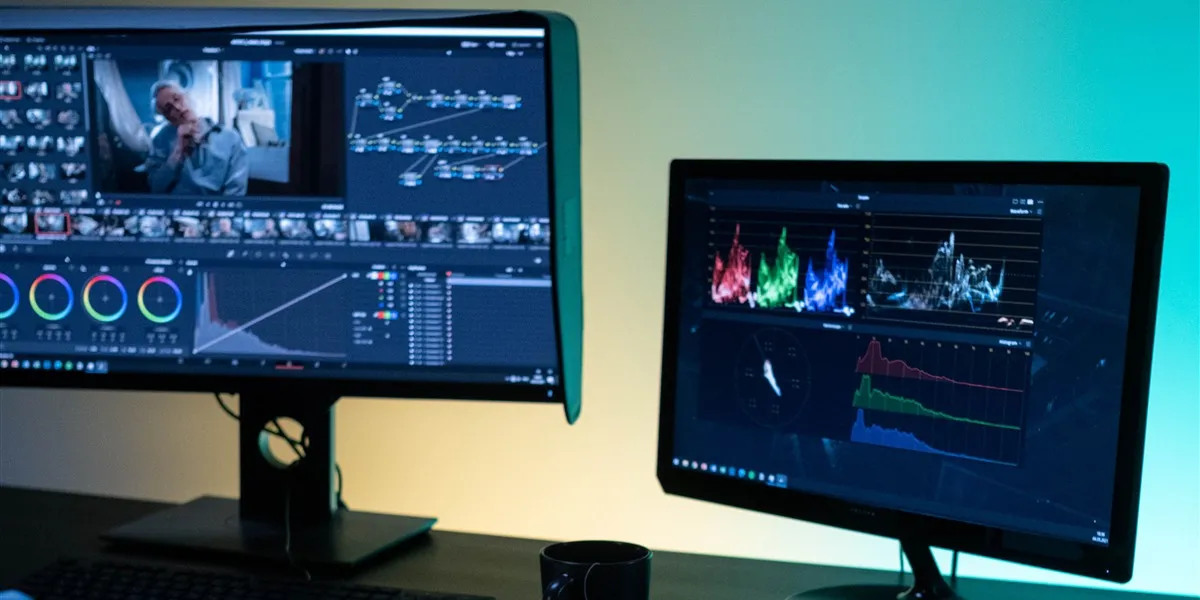
Source: Ron Lach / Pexels, Pexels License. Cropped archive photo of an editing workstation with two displays.
The release also changes what happens inside an individual export. It limits the number of threads each encoder can use, uses faster intermediate settings and avoids an extra encoding pass in a 720p path. Separate caption and layout work can also run together. Several changes went into the same release, so the time saved in the test comes from more than the number of simultaneous jobs.
What the timed export showed
The maintainer's benchmark used a publicly available source video of about eleven and a half minutes. The four 1080p output clips added up to 171.2 seconds of finished footage. The old renderer finished them in 179 seconds. The new renderer took 53.51 seconds with two clips at a time and 44.63 seconds with four. Running the new renderer one clip at a time took about 90 seconds.
The 720p example was a smaller batch. Two clips with 89 seconds of footage took 104.30 seconds on the previous version and 33.25 seconds at the new default. SupoClip's changelog describes the improvement as roughly threefold. Those timings come from the maintainer's tests, and both examples depend on the source, the selected clips and the hardware used to run them. A longer source or a batch with more ambitious layouts could move those figures in either direction.
Where the change fits in a clipping workflow
This is an export change, so it affects the wait after choosing clips. A release like Reap's timestamp clipping and layout update changes the earlier decisions about where a cut starts and how it looks. Export changes also vary by project shape. PandaStudio's earlier export work tackled delays in projects with hundreds of cuts, as opposed to SupoClip's short batch of separate output files.
The SupoClip maintainer also compared output frames against the old renderer and reported structural similarity scores around 0.99. FFmpeg's documentation describes the metric and its use in comparing encoded video. The score describes the files in the test. For a creator selecting a cover image or checking small captions, a quicker batch export leaves more time to review the finished clips at the size viewers will see.